

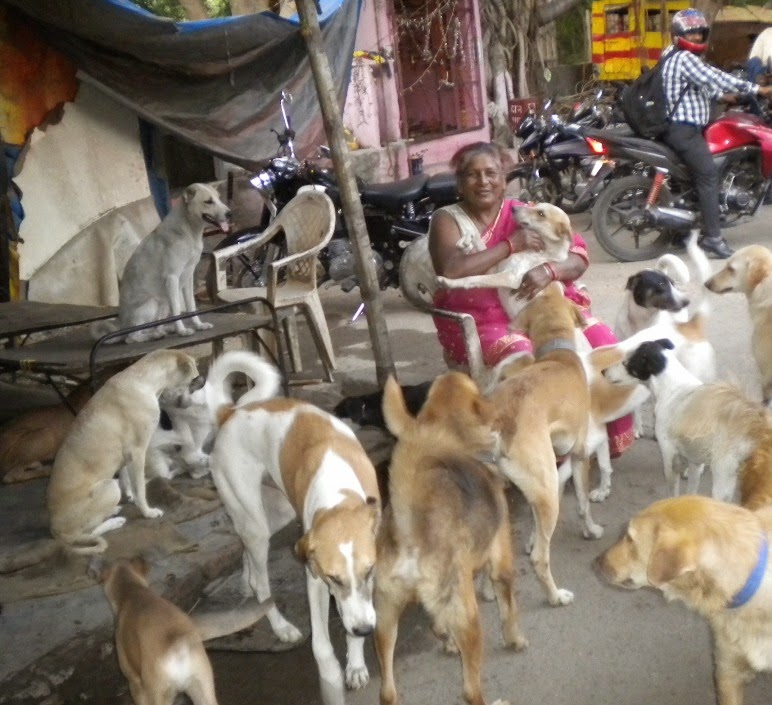
The best place to look for someone appropriate might be an NGO, but if you know someone else who might fit the bill, please do get in touch. My email ID is jaiarjun@gmail.com, or you can leave a comment here.
[More about Pratima Devi here and here]


~~ Mudahnya peluang usaha ~~
SUSU KAMBING ETAWA BUBUK 2015
E.A.P Teknologi BPTP YOGYAKARTA


Untuk itu awali tahun baru Anda dengan berwirausaha dan kembangkan bakat kewirausahaan Anda dengan bergabung bersama
~~SUSU KAMBING ETAWA BUBUK Ijin Edar LPPOM 12040002041209 E.A.P Teknologi BPTP YOGYAKARTA ~~
Ibu Eri Sulistyowati Telp/sms 089651095115 Pin 28823f03
~~ PELUANG USAHA 2015 ~~ SUSU KAMBING ETAWA BUBUK ~~
- Bisnis paling menjanjikan dengan laba 100% milik sendiri tentunya akan sangat menarik untuk dijalani. ~~ SUSU KAMBING ETAWA BUBUK ~~
- sebuah usaha kemitraan yaitu ~~ SUSU KAMBING ETAWA BUBUK ~~
- membuka sebuah penawaran paling hot di Awal tahun 2015 yaitu paket kerjasama kemitraan dengan anggaran biaya @20.000 /kotak' (partai ecer) Untuk grosir bisa MendapatkanHarga hingga @15.000 WOOOW dengan mendapatkan benefir semua kelengkapan usaha.
- Anda bisa langsung usaha ~~ SUSU KAMBING ETAWA BUBUK ~~ dengan investasi yang ringan.
- Pada tahun 2015 banyak diprediksi bahwa usaha ~~ SUSU KAMBING ETAWA BUBUK ~~ masih sangat menjanjikan.
- Disamping pangsa pasar yang luas jenis usaha ~~ SUSU KAMBING ETAWA BUBUK ~~ juga banyak diminati. Konsumen yang tiada habisnya akan banyak menyedot perhatian bagi pemilik investasi.
- Untuk itu jangan buang kesempatan ini, mari segera bergabung bersama kami dan rasakan sendiri manfaat laba untuk Anda.
- Ringan investasinya
- mudah dalam pengelolaannya
- cepat balik modal
- mudah dijalankan
- proses yang tidak berbelit-belit
- 100% laba milik sendiri
- tidak ada biaya lainnya
Tunggu apalagi, ambil telepon Anda dan hubungi kami melalui sms,bbm maupun email susukambingeta@gmail.com. Jika Anda masih ragu, konsultasikan dahulu dengan kami dan akan kami jelaskan mekanismenya. Proses yang sangat mudah dan tidak berbelit-belit akan memudahkan Anda dalam menjalani usaha ini. Kami tunggu Anda sekarang untuk bermitra bersama kami dan semoga kita biosa menjadi mitra bisnis yang saling menguntungkan. Koperasi Etawa Mulya didirikan pada 24 November 1999 Pada bulan Januari 2011 Koperasi Etawa Mulya berganti nama menjadi Etawa Agro Prima. Etawa Agro Prima terletak di Yogyakarta. Agro Prima merupakan pencetus usaha pengolahan susu yang pertama kali di Dusun Kemirikebo. Usaha dimulai dari perkumpulan ibu-ibu yang berjumlah 7 orang berawal dari binaan Balai Penelitian dan Teknologi Pangan (BPTP) Yogyakarta untuk mendirikan usaha pengolahan produk berbahan susu kambing. Sebelum didirikannya usaha pengolahan susu ini, mulanya kelompok ibu-ibu ini hanya memasok susu kambing keluar daerah. Tenaga kerja yang dimiliki kurang lebih berjumlah 35 orang yang sebagian besar adalah wanita. Etawa Agro Prima membantu perekonomian warga dengan mempekerjakan penduduk di Kemirikebo.~~ Mudahnya peluang usaha ~~
SUSU KAMBING ETAWA BUBUK 2015
Ibu Eri Sulistyowati Telp/sms 089651095115 Pin 28823f03
~~ PELUANG USAHA 2015 ~~
~~SUSU KAMBING ETAWA BUBUK ~~

 I could write a book, or five, on the years that followed, but here’s a summary. We got a couple of the pups adopted, three others succumbed to infection and to the wheels of careless or callous drivers, and we took in the last remaining one, who became our Foxie. Though a strong and hugely energetic dog at first, she spent the second half of her short life afflicted by an intestinal condition that necessitated monitoring her diet carefully, providing medicines with each meal, cleaning up after her six or seven times a day, and watching the accumulation of side-effects: she became ill-tempered during the bad phases, suffered from pain in her hind legs, was so emaciated that most of her ribs showed, and when I took her for a walk downstairs she spent her time not running around after a ball as she once had but sniffing around for the sort of food we had to deny her at home. Then, just when it seemed her condition had stabilised and she was regaining the old spirit, she passed away on the doctor’s table last year, aged barely four.
 Since Fox had a somewhat unusual, elongated body structure and because she stretched out in odd positions, we used to joke that she was many animals in one. When she nibbled on leaves with her ears down, she resembled a goat. Lying on the floor with her arms spread out ahead and her legs on the side, she could seem reptilian: lizard-like or dinosaur-like. There was an odd, camel-like undulation in her movement at other times, and she was a race-horse when she galloped in circles around the park in those precious, much-too-brief early months. When I watched news coverage of the “psychic” octopus Paul, I could imagine a skilled cartoonist drawing a picture of an octopus with a round Foxie head, the eyebrows raised dolefully. I haven’t come close to bonding with any of these creatures, but thanks to her I feel like I know them all a little better.
 And so, maybe I should end on a somewhat upbeat note by mentioning an old woman who leads a hand-to-mouth existence but can still see and feel things that many far more privileged people can’t. Pratima Devi – “Amma” to everyone who knows her – lives in a small shack next to south Delhi’s PVR Saket multiplex, five minutes from where I stay. For nearly three decades now, though earning a meager livelihood as a ragpicker, she has been looking after dozens of street dogs in the vicinity: feeding them, getting them neutered, maintaining relations with a local vet and animal-welfare organizations. But she is very far from the cliché of the socially inept recluse who is cut off from other human beings: her warmth and openness touches everyone who comes to know her. I discovered that quality for the first time a few days after Foxie died, when, driven by a need to reach out to someone who might understand, I went across to meet her. Since then, she has been a constant reminder of what open-heartedness is, and what seeing and feeling can really mean.


 Whatever the case, though I was intrigued by the “kutton waali amma” who was often spoken of in our colony, I didn’t make an effort to come close or get to know her. That changed last June, after Foxie went. Driven by an urge that overrode all our hesitations and procrastinations, we went across and said namaste to Pratima Devi, and were relieved to find that she was extremely warm and friendly, and most happy to talk – not just about the dogs but about her life, and ours.
 Every week or so I go across and check on Pratima Devi, take some food, but hardly ever has she given the impression of being in need. When I show up and ask if I can get some bread and milk for the dogs from the nearby Mother Dairy, she nods with an indulgent little smile, as if she is doing me a favour (and of course, in a post-Foxie world, she is). Or if the evening’s ration has already arrived, she asks me to come after a day or two, or to call her beforehand to check. On one occasion my mother, cradling one of the new pups, remarked aloud that she felt like adopting this one. You’d think that Pratima Devi, given her hand-to-mouth situation, would be only too glad for people to take dogs off her hand, but she practically jumped up and said “Nahin nahin! Abhi yeh bahut chhoti hai – isse mere paas kuch din aur rehna do.” (“No, she’s too little now – let me look after her for a few more days.”)
 But it isn’t my intention to paint a rosy picture of her life. One often hears clichés about the “warm smiles” of the poor – clichés built on the sentimentalising of poverty, on the self-serving myopia of the well-off person who chances to see poor people in their moments of relative comfort and tells himself “They have nothing, but look how happy they are.” I have felt strongly about such hypocrisy for a long time, so it came as a jolt to me one day when I realised I may have been adopting a similar attitude to Pratima Devi; taking for granted her apparently infinite capacity for cheerfulness and optimism.
